
When hauling construction machinery, agricultural equipment, industrial assets, or other oversized freight, choosing the right trailer can make the difference between a smooth delivery and a logistical headache. While standard flatbed trailers remain one of the most versatile hauling platforms on the road, step deck trailers offer significant advantages when transporting taller or heavier loads.
Their lower deck height improves loading efficiency, accommodates taller cargo, and frequently helps carriers remain within legal height limits without requiring oversize permits. When freight height becomes a concern, a step deck trailer is often the most practical and cost-effective solution.
Understanding when to use a step deck trailer, what freight is best suited for it, and how to load equipment safely can help carriers maximize efficiency while remaining compliant with transportation regulations.
What Is a Step Deck Trailer?
A step deck trailer, sometimes called a drop deck trailer, features two deck levels. The upper deck sits directly behind the tractor, while the main deck drops down several feet lower than a standard flatbed.
The purpose of the lower deck height is to allow drivers to transport taller freight without exceeding legal height limits. The lower deck creates around 10" to 12" of additional vertical clearance compared to a standard flatbed, which can then eliminate the need for oversized permits, escorts or alternate route planning.
The Advantages of Step Deck Trailers for Heavy Equipment Hauling
Easier Loading and Unloading
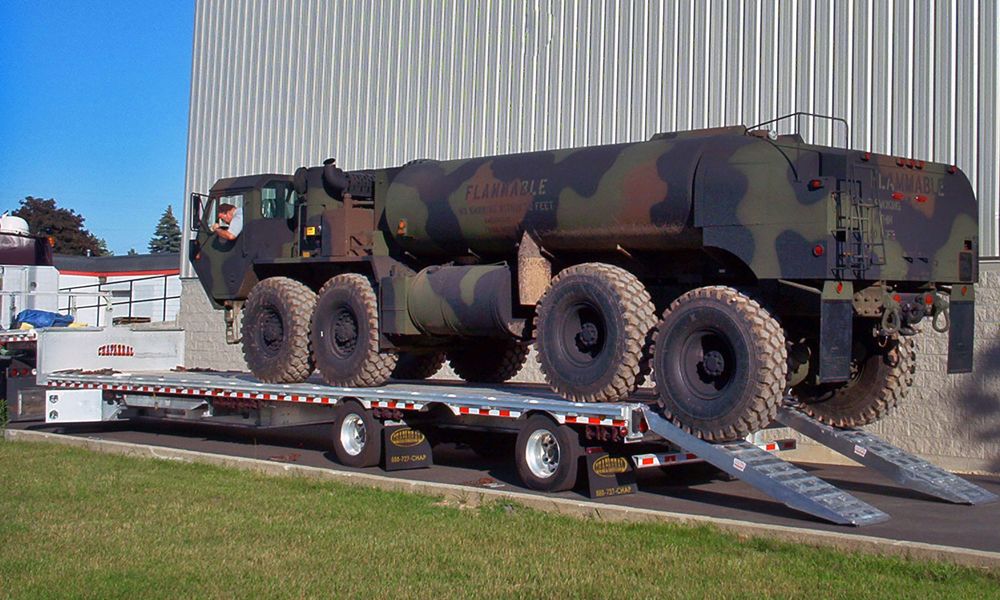
The lower deck height makes loading many types of equipment significantly easier. Construction machinery, skid steers, compact excavators, scissor lifts, and agricultural equipment can often be driven directly onto the trailer using loading ramps.
Because the loading angle is reduced compared to a standard flatbed, operators benefit from:
- Improved traction during loading
- Reduced risk of equipment bottoming out
- Easier access for low-clearance machinery
- Increased loading confidence and safety
Many carriers hauling wheeled or tracked equipment prefer step decks because they simplify loading operations at both pickup and delivery locations.
Greater Freight Flexibility
One of the biggest advantages of a step deck trailer is its ability to accommodate freight that would otherwise exceed height restrictions on a standard flatbed.
The lower deck allows carriers to transport:
- Tall machinery
- Manufacturing equipment
- Agricultural implements
- Crated industrial components
- Large generators
- Tank systems
- Building materials
This versatility allows carriers to accept a wider range of freight opportunities while reducing the need for specialized trailers.
Regulatory Advantages
Federal and state regulations generally limit overall vehicle height to approximately 13' 6" on most highways, although requirements can vary by state.
A standard flatbed trailer deck typically sits around 60" off the ground, whereas step deck trailer's lower deck sites closer to 40". That reduction in deck height can provide nearly an additional foot of legal cargo clearance, which makes a big difference when trying to adhere to legal size limits.
This can help carriers:
- Reduce permitting costs
- Avoid route restrictions
- Eliminate escort vehicle requirements
- Simplify trip planning
- Improve delivery flexibility
When Should You Use a Step Deck Trailer Instead of a Flatbed?
A flatbed remains an excellent choice for many loads, particularly when freight dimensions stay comfortably within legal limits. However, a step deck becomes the preferred option when cargo height approaches or exceeds legal restrictions.
Use a Step Deck When Hauling Tall Freight
The most common reason to choose a step deck is cargo height.
Examples include:
- Skid steers with enclosed cabs
- Mini excavators
- Telehandlers
- Agricultural tractors
- Industrial compressors
- CNC machinery
- Large generators
- Manufacturing equipment
If the freight exceeds approximately 8' 6" tall, carriers often begin evaluating whether a step deck will provide sufficient legal clearance.
Use a Step Deck for Equipment That Loads Better at Lower Angles
Equipment with low ground clearance or longer wheelbases may struggle with steeper loading angles associated with standard flatbeds, which creates problems with high-centering, or risk of injury when using the longer ramp lengths required for loading up to a 60" flatbed height.
Step deck loading ramp kits are an all-in-one solution that many step deck drivers use to ensure that they also have loading ramps on hand that work with their trailer. The skid seat brackets allow for secure ramp connections every time and some kits come with hanger brackets to store the ramps directly under the trailer during transit.
Use a Step Deck to Avoid Oversize Permits
If a load exceeds legal height limits on a flatbed but remains compliant on a step deck, switching trailers can significantly reduce transportation costs and complexity.
In many cases, using a step deck allows carriers to move freight legally without the additional administrative burden associated with oversize loads.
Best Freight Types for Step Deck Trailers
Construction Equipment
Step decks are widely used throughout the construction industry for transporting:
- Skid steers
- Compact track loaders
- Mini excavators
- Scissor lifts
- Boom lifts
- Rollers
- Small dozers
The lower deck height makes loading easier while accommodating taller machine profiles.
Industrial Machinery
Manufacturing and industrial facilities frequently rely on step deck trailers to transport:
- CNC machines
- Compressors
- Pumps
- Generators
- Processing equipment
- Electrical systems
- Fabrication machinery
Many of these assets are both heavy and tall, making step decks an ideal transportation solution.
Agricultural Equipment
Farm equipment often exceeds the height limitations of standard flatbeds.
Common agricultural freight includes:
- Tractors
- Sprayers
- Seeders
- Tillage equipment
- Harvest attachments
- Hay equipment
The additional clearance provided by a step deck helps carriers move agricultural machinery safely and legally.
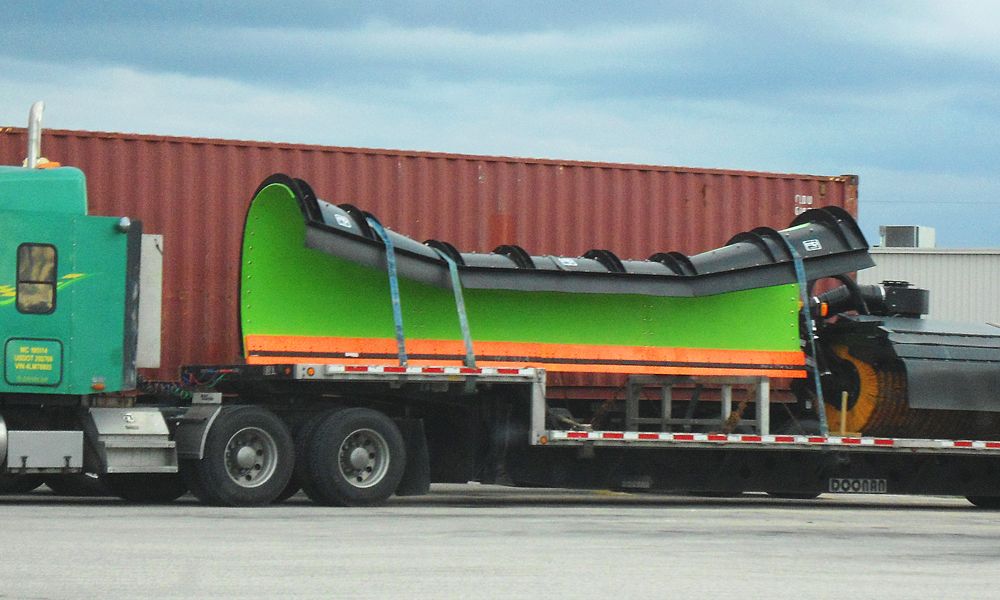
Oversized and Specialized Loads
Step decks are also commonly used for:
- Prefabricated structures
- Storage tanks
- Steel fabrications
- Utility equipment
- Oil and gas components
- Energy infrastructure components
- Military vehicles
Their versatility makes them one of the most widely used trailer types in specialized hauling operations.
How to Load Tall Equipment on a Step Deck Trailer
Proper loading techniques are critical for safety, equipment protection, and regulatory compliance.
Evaluate Height Before Loading
Always measure the equipment before loading and calculate the final loaded height.
Account for:
- Trailer deck height
- Tire compression
- Attachments and accessories
- Exhaust stacks
- Cab roofs
- Safety structures
Verifying dimensions beforehand helps prevent costly surprises at weigh stations or restricted routes.
Position Weight Correctly
Weight distribution directly impacts vehicle handling and axle compliance. The Federal legal weight limit for vehicle and freight is 80,000 lbs. gross total on Interstate roads, although some state roads allow for heavier configurations. Factoring in the weight of the tractor, most step deck trailers can accommodate a gross cargo weight of 44,000 lbs. (dependent on trailer model).
Gross axle weight is also closely monitored and limits are strictly enforced by the DoT, because as the weight of an axle increases, the damage done to the road goes up by a factor of four. Always take axle weight into account when planning where to position cargo.
General guidelines include:
- Place heavier equipment over or slightly ahead of the trailer axles
- Avoid excessive rear weight bias
- Maintain proper tractor drive axle loading
- Follow manufacturer load placement recommendations
Improper weight distribution can create stability issues and lead to axle weight violations.
Lower or Remove Attachments on the Load
Whenever possible:
- Lower booms
- Fold mirrors
- Remove buckets
- Detach accessories
- Retract hydraulic components
Reducing overall height can help maintain legal compliance and improve load stability.
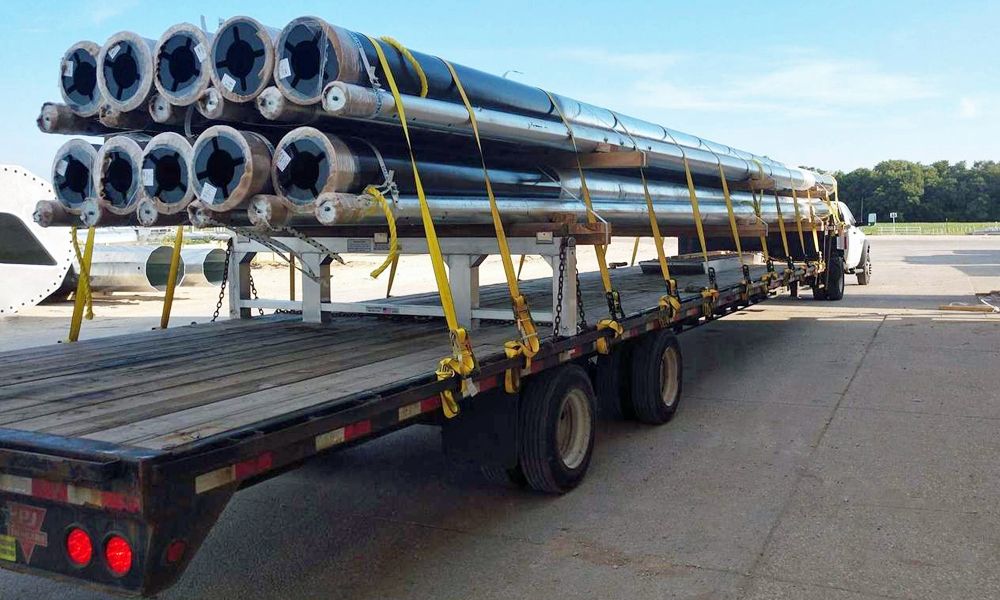
Use Proper Securement Practices
Federal cargo securement regulations require equipment to be restrained against movement in all directions.
Common securement methods include:
- Grade 70 transport chains
- Ratchet binders
- Direct tie-downs
- Wheel chocks when appropriate
- Additional securement for articulated components
Inspect chains, binders, anchor points, and tie-down locations before every trip.
Verify Clearance Along the Route
Even when a load falls within legal height limits, route planning is essential to ensure that there are no surprises along the way. Identify states with specific restrictions, as well as any construction zones, bridge clearances and utility crossings. There are multiple trucking apps and maps that show low clearances, buried pipes and lines that don't allow for oversized vehicles and similar nuances that standard GPS maps just don't provide.


