
In any warehouse facility, employee safety and efficiency are paramount. Loading and unloading trucks from loading bays should be a fine-tuned process that mitigates the risk of injury or damage to goods, and emphasizes quick turnaround times without tiring workers.
HD Ramps Aluminum Dock Boards are equipment designed with all of those considerations in mind. They can be moved with a forklift for faster set-up time, they are wide enough and strong enough to be used with a forklift, pallet jack or hand truck, and they have raised safety curbs to prevent roll-offs. The epoxy grit-coat surface adds traction in situations where the truck or bay is wet, to reduce slippage. They support loaded forklifts up to 20,000 lbs.
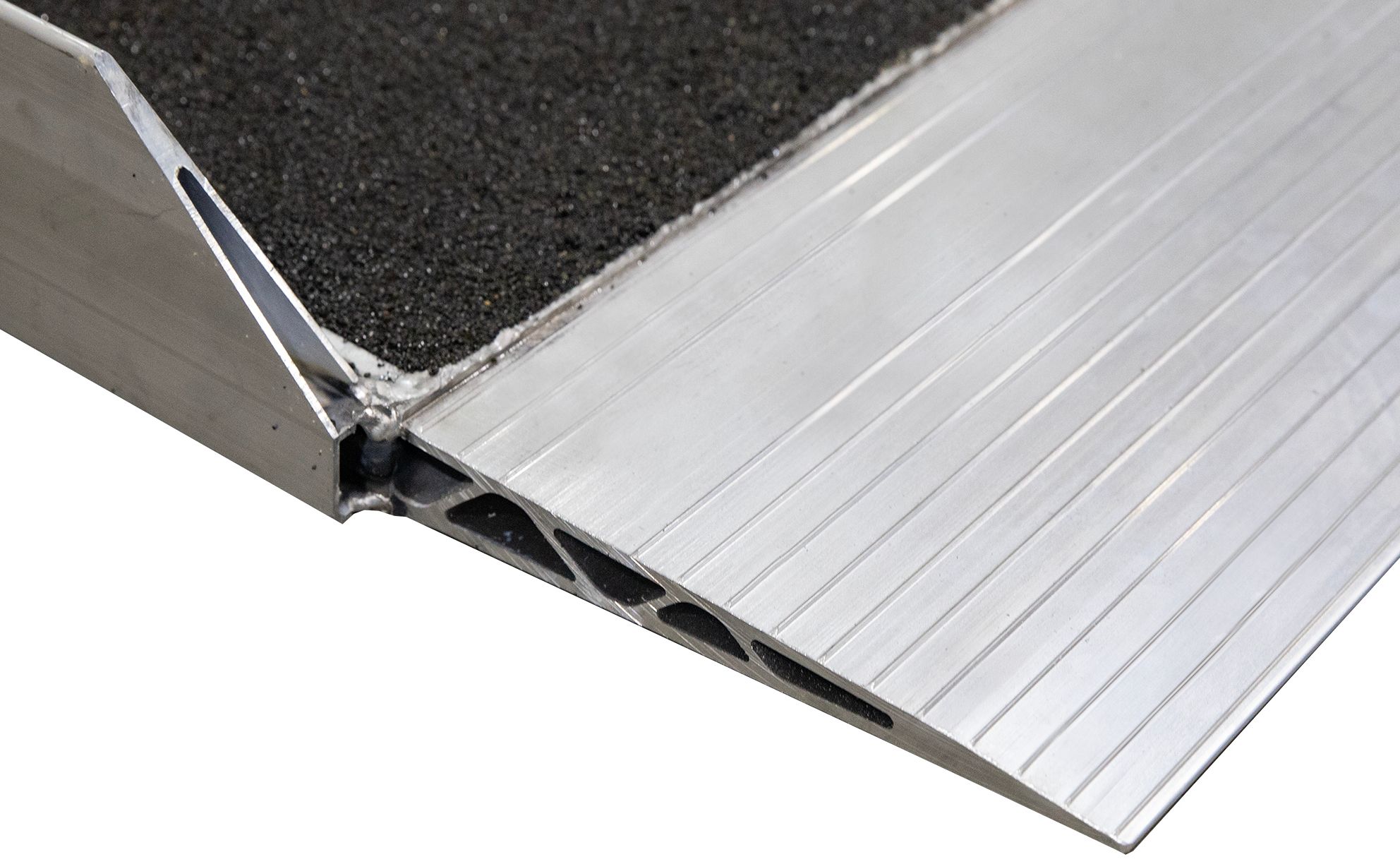
They also feature a uniquely engineered structure that you won't find with other boards. The patent-pending internal aluminum truss design was manufactured to reduce the overall weight of the board without compromising the strength.
How to Decide: Aluminum vs Steel Dock Boards
When choosing between aluminum dock boards and steel dock boards, start by assessing your typical warehouse routines and the loads you handle every day. Aluminum dock boards are the clear choice for operations focused on frequent setup changes, rapid movement, and ease of handling because they're lighter, making them ideal for facilities requiring quick repositioning or manual handling.
For example, if your team needs to move dock boards several times a day for different truck heights or dock positions, or when operators switch between hand trucks, pallet jacks, and forklifts, aluminum's light weight minimizes strain and keeps workflows smooth.
Steel dock boards, on the other hand, are better suited for static setups involving maximum-capacity, high-impact loads, where absolute strength is non-negotiable and mobility isn't a top concern.
Consider a scenario where your crew unloads mixed freight using both pallet jacks and forklifts. With loads, such as cartons, drums, or pallets under 15,000 lbs., aluminum dock boards offer all the strength you need with faster, easier placement and removal, reducing downtime between truck arrivals. However, if you routinely transport extremely heavy machinery or oversize pallets, the added ruggedness of steel boards may give you extra confidence against deflection over time.
A quick comparison:
- Light to medium freight, frequent board relocation, and mixed manual/equipment use? Choose aluminum.
- Heavy manufacturing, single-equipment dock doors, and continuous heavy loads? Opt for steel.
What Size Dock Board Do You Need to Bridge Your Gap?
To determine what size dock board you need for your application, you will need to know the height differential, or height difference, between your loading dock and the trailer floor height of your highest trailer, as well as the type of loading equipment used at your facility.
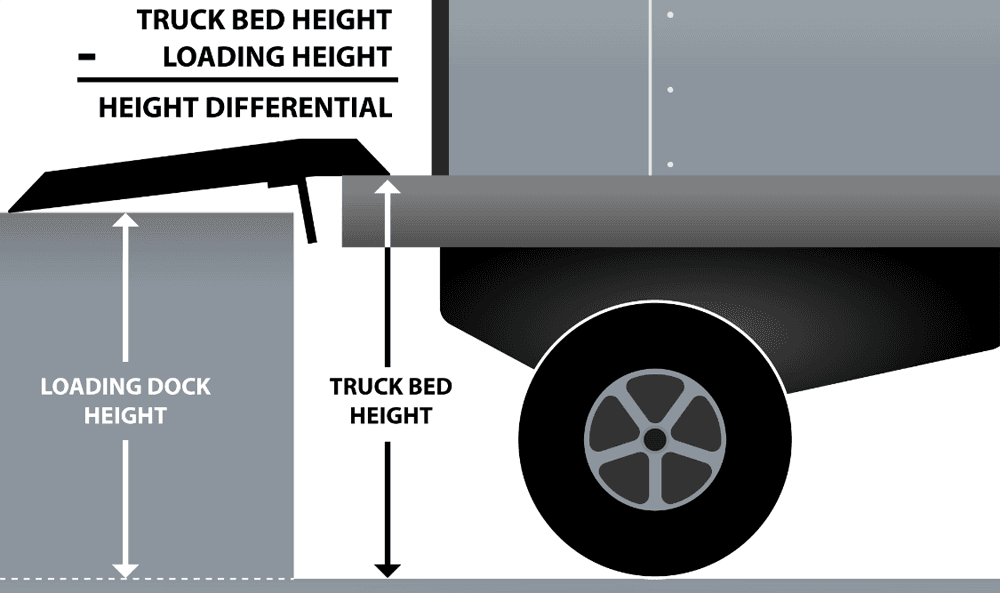
To find the height differential, simply subtract the height of your loading dock from the height of the highest trailer floor. This is typically anywhere from 3" to 7".
(Highest Trailer Floor Height) - (Loading Dock Height) = (Height Differential)
To find the minimum width you need, measure the width of your largest pallet or piece of equipment, then add 12" to that number. This will ensure you have enough room to maneuver safely.

Frequently Asked Questions About Dock Boards

What Is the Difference Between a Dock Plate and Dock Board?
Dock plates are flat, lightweight bridging devices made from aluminum or steel. They are designed to span the gap between a dock and a truck for hand trucks, pallet jacks, or light carts. Since they have no raised curbs and limited reinforcement, dock plates are best for lower weight applications and lighter warehouse traffic.
In contrast, dock boards are reinforced, load-bearing structures with side curbs for added safety. Dock boards handle the weight of forklifts, powered pallet jacks, and heavier loads, making them essential for environments with frequent use of heavy equipment.
Use dock plates when you need a simple, portable bridge for light loads and dock boards when high capacity, stability, and operator safety are mission-critical.
What Are Dock Boards Used For?
Loading and unloading between trucks and docks demand smooth, coordinated processes to keep products moving efficiently while minimizing the risk of injuries. Aluminum dock boards bridge the height difference between dock and trailer, providing a stable surface for forklifts, pallet jacks, or hand trucks to cross without interruption. This setup reduces the need for risky manual lifting and allows teams to move large or heavy items quickly and safely.
The traction grit-coat and raised side curbs prevent slippage and accidental roll-off, keeping both employees and freight secure. By supporting seamless movement between trucks and docks, dock boards help prevent downtime, maintain tight
Can Dock Plates or Boards Dislodge?
Securing dock boards and plates is essential for employee safety and stable loading operations. Most aluminum dock boards feature welded-on locking legs that fit into the gap between the dock and the truckbed, preventing the board from shifting during use. Some models include pin-style locks or bolt-down options for additional security in high-traffic or uneven loading bays.
When setting up, always ensure the locking legs or pins are firmly engaged before moving equipment across the board. For facilities that need even more stability, look for boards with underslung anti-slip channels or surface grips that further reduce any risk of lateral movement. Regularly inspecting locking mechanisms for wear or deformation is also key, as damaged components can compromise stability and safety. Since workers may sometimes rush during shift changeovers, develop a checklist or quick visual confirmation routine to verify the board is locked before use. These best practices help minimize the chance of dislodgement and ensure consistent safe operation throughout busy loading and unloading cycles.
Are Dock Boards Compliant with OSHA?
OSHA Requires all dock equipment to meet strict safety guidelines, including load capacity signage, slip-resistant surfaces, and secure placement features to minimize accident risks during loading and unloading. Aluminum dock boards from HD Ramps are engineered to align with these standards by offering clearly marked capacities, built-in safety curbs, and highly visible grit-coat surfaces that reduce slip hazards in both wet and dry conditions. Moreover, their locking legs and easy maneuverability ensure the board stays firmly in position while being easier to reposition or remove.
To confirm compliance, buyers should ask:
- Does each board display its rated capacity?
- Are the side curbs at least 4" high to prevent roll-off?
- Is the surface slip-resistant under rain or moisture?
- Does the board have locking features to stop shifting during use?
- Have all welds and truss reinforcements been tested for durability under normal and extreme loads?
By running through this checklist before purchase, you help ensure your facility's dock equipment supports employee safety and meets all OSHA or applicable regulatory requirements.


